A Quick Note: I occasionally include affiliate links. As an Amazon Associate, I earn from qualifying purchases at no extra cost to you.

The 7-Day Cortisol Reset: A Step-by-Step Guide to Lowering Cortisol and Reclaiming Your Energy
Stop the 'tired but wired' cycle with this science-backed, 7-day guide to lowering cortisol naturally. Designed for the modern midlife woman, this protocol covers everything from the 30g protein rule and sugar-free mineral resets to lymphatic drainage for 'moon face.' Learn how to stabilize your hormones, banish stress-induced belly fat, and reclaim your energy for your healthiest chapter yet.
12/19/20258 min read
If you are a woman over 35, you likely know the feeling: You wake up exhausted even after eight hours in bed. You hit a wall at 3 PM that no amount of caffeine can fix. You’re doing the same workouts and eating the same salads that used to keep you lean, but suddenly, you’re noticing a "tire" around your midsection and puffiness in your face that won’t budge.
You aren’t crazy. You aren’t lazy. You are likely dealing with HPA Axis Dysregulation—better known as a cortisol imbalance.
In our modern world, we wear "busy" as a badge of honor. But for the midlife woman, chronic busyness triggers a biological alarm system that is much harder to turn off than it was in our 20s. As our sex hormones (specifically progesterone) begin to shift during perimenopause, we lose our natural stress buffer. The result? A body that thinks it is running from a tiger 24/7.
Welcome to the 7-Day Cortisol Reset.
This guide is not a crash diet. It is a biological intervention. Over the next seven days, we are going to systematically send signals of safety to your nervous system. We will use the science of circadian biology, nutrient timing, and mineral balancing to tell your adrenal glands, "It’s okay. You can stand down."
Here is exactly how to do it—and the science of why it works.
(Note: If you are unsure if cortisol is your issue, read my deep dive on the 7 Signs of High Cortisol in Women to identify your symptoms first.)
Day 1: The Circadian Reset ☀️
The Focus: Light Exposure & Melatonin Protection
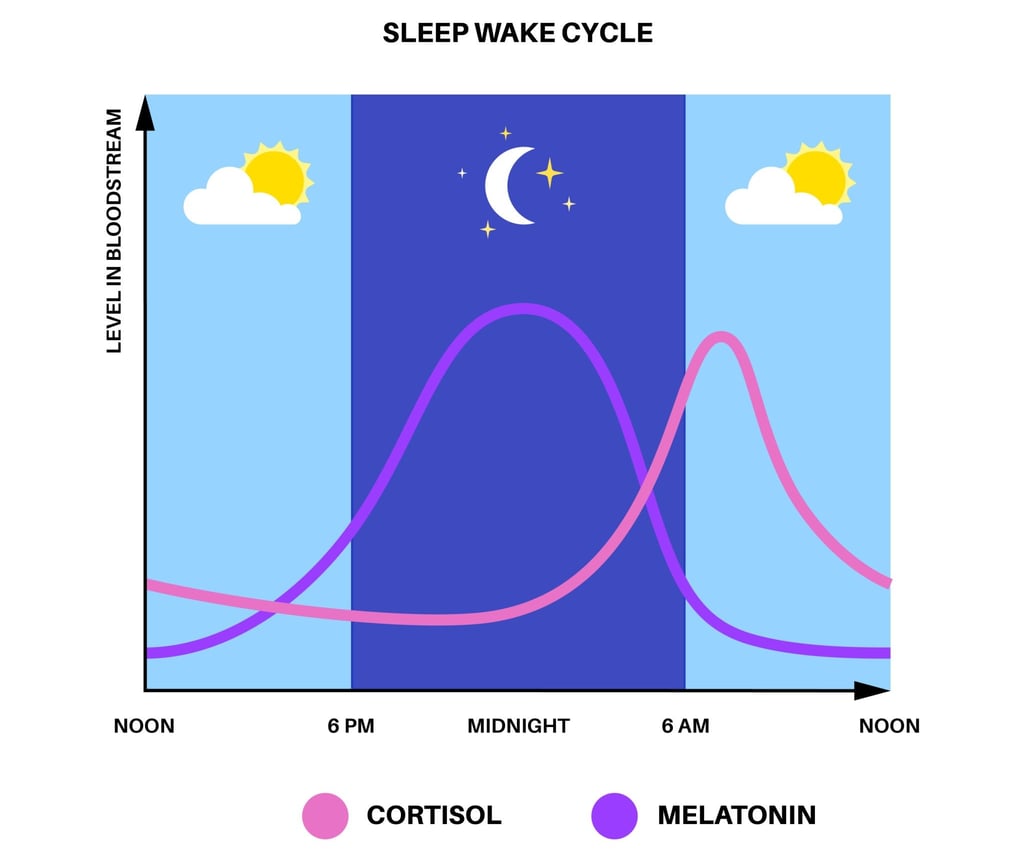
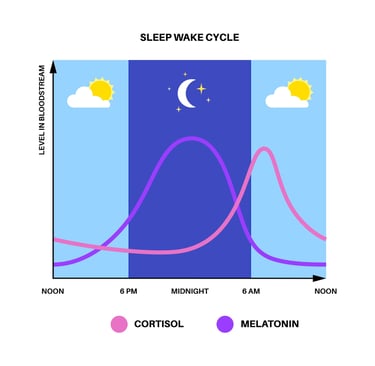
We start here because cortisol is, first and foremost, a circadian hormone. In a healthy body, cortisol follows a distinct curve: it should spike within 30 minutes of waking (the Cortisol Awakening Response or CAR) to energize you, and then gradually taper off until it hits its lowest point at bedtime, allowing melatonin to rise.
For many of us, this curve is inverted. We have low cortisol in the morning (grogginess) and high cortisol at night ("tired but wired"). To fix your hormones, you must fix your light environment.
The Science
Your circadian rhythm is governed by the Suprachiasmatic Nucleus (SCN) in your brain. The SCN is photosensitive. When high-lux light hits your retina in the morning, it triggers the release of cortisol, dopamine, and serotonin, setting your metabolic timer for the day. Conversely, the absence of blue light in the evening triggers the pineal gland to release melatonin.
If you look at your phone (blue light) at 10 PM, you are literally signaling to your brain that it is noon. Your brain responds by suppressing melatonin and pumping out cortisol to keep you "alert" for the perceived daytime.
The Protocol
Morning Optical Nutrition: Within 60 minutes of waking, get outside for 10–15 minutes. No sunglasses. You need natural photons hitting your eyes to trigger that healthy morning cortisol spike. This prevents the "slump" later in the day.
Evening Light Hygiene: After sunset, your home should mimic a cave. Dim the overhead lights.
The Tool: Wear Blue Light Blocking Glasses starting at 7 PM. This protects your melatonin production, ensuring you can fall into the deep, restorative sleep required to flush stress hormones from the brain.
Day 2: The Protein Anchor 🍳
The Focus: Blood Sugar Stabilization
If Day 1 was about light, Day 2 is about fuel. Specifically, preventing the Insulin-Cortisol Seesaw.
The Science
Blood sugar volatility is one of the biggest hidden drivers of anxiety and adrenal stress. When your blood sugar crashes (hypoglycemia)—often around 10 AM after a carb-heavy breakfast or just coffee—your brain views this as a survival emergency.
To save you, your adrenals release cortisol. Why? Because cortisol triggers a process called gluconeogenesis, where your body breaks down muscle tissue to release stored glucose into the bloodstream for quick energy. This creates a vicious cycle: You eat carbs/sugar --->Insulin spike ---> Blood sugar crash ---> Cortisol spike ---> Cravings for more sugar.
The Protocol
We stop the seesaw by anchoring your blood sugar first thing in the morning.
The 30g Rule: You must eat 30 grams of protein within 30 minutes of waking.
Why Protein? Protein blunts the hunger hormone ghrelin and stimulates peptide YY, which signals satiety. It provides a slow, steady release of energy without the insulin spike.
The Swap: Coffee is not breakfast. If you are rushing, use a high-quality protein powder like Clean Simple Eats. I recommend this brand specifically because it is free of the inflammatory fillers that can irritate the gut, and it tastes good enough that you won't dread drinking it. One scoop gives you 20g of protein—mix it with collagen or Greek yogurt to hit your 30g goal easily.
Day 3: The Mineral Mocktail 🍹
The Focus: Replenishing the "Batteries"
By Day 3, your blood sugar is stable, but you might still feel fatigued. This is where we address the "spark plugs" of your cells: Minerals. Most adrenal cocktails call for orange juice, but for those of us living a sugar-free lifestyle, that's a hard pass. We want the mineral support without the insulin spike. My sugar-free version uses fresh lime or lemon juice as the Vitamin C source. This delivers the necessary nutrients to your adrenals while keeping your blood sugar perfectly flat. It’s the ultimate afternoon 'spark' without the crash.
The Science
Stress is expensive. Biologically speaking, the production of stress hormones consumes massive amounts of minerals, specifically Sodium, Potassium, and Magnesium.
Sodium: Your adrenal glands rely on sodium to function. When you are stressed, your body burns through sodium rapidly (which is why you crave chips when you're anxious).
Potassium: Intracellular potassium is necessary for energy production.
The Aldosterone Connection: Chronic stress impacts aldosterone, the hormone that regulates fluid balance. Low aldosterone leads to frequent urination and dehydration, further depleting your minerals.
Drinking plain water when you are mineral-depleted can actually flush out your remaining electrolytes, making you feel more tired.
The Protocol: The Sugar-Free Adrenal "Spark"
Stop drinking plain water all afternoon. Instead, introduce the Adrenal Cocktail during your 2 PM slump.
The Timing: Drink this between 10 AM and 2 PM (when your natural cortisol begins its afternoon dip).
The Recipe (100% Sugar-Free):
8oz Filtered Water or Sparkling Mineral Water (for hydration)
2 tbsp Fresh Lemon or Lime Juice (Provides the Vitamin C "bioflavonoids" without the fructose of orange juice)
1/4 tsp Cream of Tartar (This is pure Potassium—essential for lowering blood pressure and calming the heart rate)
1/4 tsp Redmond Real Salt or Celtic Sea Salt (Provides 60+ trace minerals and essential Sodium to support the adrenal cortex)
Optional: 1 scoop of unflavored Collagen (adds amino acids to support the gut lining)
Optional: A few drops of Stevia or Monk Fruit (if you prefer a "lemonade" taste)
The Result: You are essentially recharging your body's battery. Many women find this eliminates their afternoon brain fog entirely within 20 minutes.
Day 4: The Vagus Nerve Update 🧘♀️
The Focus: Switching from "Fight or Flight" to "Rest and Digest"
You cannot "think" your way out of a high-cortisol state. You have to "feel" your way out. Today, we target the Vagus Nerve.
The Science
Your autonomic nervous system has two main branches:
Sympathetic: "Fight or Flight" (High Cortisol).
Parasympathetic: "Rest and Digest" (Calm/Healing).
The Vagus Nerve is the physical bridge between your brain and your body. When you stimulate it, you manually flip the switch to Parasympathetic mode. In this state, cortisol lowers, digestion improves, and heart rate variability (HRV) increases.
The Protocol
Breathwork: We will use Box Breathing (Inhale 4, Hold 4, Exhale 4, Hold 4). The "hold" and the long exhale physically compress the Vagus nerve, signaling safety to the brain. Do this for 5 minutes before dinner.
Nutrient Support: Sometimes, the nervous system is too "wired" to calm down on its own. This is where Magnesium L-Threonate (found in PYM Mood Magnesium) is critical. Unlike other forms of magnesium that just help you poop, L-Threonate can cross the blood-brain barrier. It acts directly on the brain's receptors to quiet the "excitatory" signals (glutamate) and boost the "calming" signals (GABA). It’s like a software update for an anxious brain.
Day 5: The Lymphatic Flush 💆♀️
The Focus: Reducing "Moon Face" and Inflammation
High cortisol makes us puffy. Today, we address the physical manifestation of stress: Systemic Inflammation.
The Science
Cortisol is structurally similar to mineralocorticoids, which causes the body to hold onto sodium and water while dumping potassium. This results in water retention, particularly in the face (the classic "Moon Face"). Furthermore, chronic stress slows down the Lymphatic System—your body's garbage disposal. When lymph becomes stagnant, toxins accumulate, leading to breakouts, puffiness, and a "heavy" feeling.
The Protocol
We are going to manually pump the lymph system.
The Tool: Kitsch Stainless Steel Gua Sha. I prefer stainless steel over jade or quartz because it is non-porous (bacteria-free) and naturally cold. The cold temperature constricts blood vessels (vasoconstriction) to instantly reduce inflammation.
The Technique: You must open the "drains" first. Start at the collarbone, sweeping down. Then move to the jawline, sweeping from the chin out to the ear, and then down the neck.
The Benefit: This isn't just vanity. Moving lymph helps your body process and excrete metabolized hormones (like excess estrogen and cortisol) rather than recirculating them.
Day 6: The Cortisol "Blunt" 🏃♀️
The Focus: Movement That Heals, Not Hurts
Exercise is a form of stress. In a healthy body, it’s a "good" stress (eustress). But in a high-cortisol body, intense exercise can backfire.
The Science
When you do High-Intensity Interval Training (HIIT) or heavy cardio, your body releases cortisol to mobilize energy. If your baseline cortisol is already chronically high, a HIIT class can push you into a Catabolic State—where your body breaks down muscle tissue and hoards fat (especially visceral belly fat) as a protective mechanism.
Midlife women often see better fat loss results by dialling down the intensity.
The Protocol
Zone 2 Cardio: Today, we walk. Aim for 30–45 minutes of walking where you can still hold a conversation (Zone 2). This increases blood flow and burns fat without spiking cortisol.
Adaptogen Support: To further blunt the cortisol response to daily stress, we use Ashwagandha. I recommend Youtheory Ashwagandha because it uses the KSM-66 strain, which has the most clinical research backing it. Studies show it can lower serum cortisol levels by nearly 30% by modulating the HPA axis. Think of it as a thermostat for your stress response—it prevents the "heat" from getting too high.
Day 7: The Digital Detox & Review 📖
The Focus: Eliminating Micro-Stress
We end the week by addressing the most pervasive source of modern cortisol: The dopamine loop in your pocket.
The Science
Every notification on your phone triggers a micro-spike of dopamine and cortisol. It keeps your brain in a state of "continuous partial attention." This constant scanning for threats (or emails) keeps the amygdala (fear center) enlarged and overactive.
You cannot reset your cortisol if you are checking work emails at 6 AM.
The Protocol
The First Hour: No phone for the first 60 minutes of the day. This prevents the outside world from hijacking your dopamine and cortisol before you’ve even had coffee.
Gratitude Journaling: This sounds fluffy, but it is physiological. The Institute of HeartMath has shown that feelings of gratitude induce Heart Coherence—a smooth, sine-wave pattern in heart rate variability that signals the nervous system to lower cortisol and DHEA.
Review: Look back at your week. Which day made the biggest difference? Did the protein breakfast stop your cravings? Did the Gua Sha make you look more rested?
Moving Forward: Your New Normal
The 7-Day Cortisol Reset is not a finish line; it is a baseline.
You have now given your body a taste of what it feels like to function with your biology, not against it. You’ve learned that "aging gracefully" isn’t about starving yourself or running until you collapse. It’s about nourishment, rest, and safety.
By continuing these habits—prioritizing protein, protecting your sleep, and supporting your minerals—you aren't just lowering cortisol. You are building a body that is resilient enough to handle the stress of modern life without breaking down.
Ready to dive deeper? If you want to understand why your body is reacting this way, read my full guide: 7 Signs of High Cortisol in Women & How to Fix It. It covers the science of "Moon Face," belly fat, and the "Pregnenolone Steal" in detail.
Disclaimer: I am not a doctor. This guide is based on nutritional science and wellness practices. Always consult with your healthcare provider before starting new supplements, especially if you are on medication.
Connect
info@marvelouslymidlife.com
© 2025. All rights reserved.
DISCLAIMER: As an Amazon associate and affiliate for other brands, I earn commissions from qualifying purchases.