A Quick Note: I occasionally include affiliate links. As an Amazon Associate, I earn from qualifying purchases at no extra cost to you.
TOXIC Foods Destroying Your Liver & Blocking Weight Loss
Ready to increase fat burn and lose weight fast? 🛑 Discover the 7 toxic foods destroying your liver and the life boosting habits for women to start today to reverse the damage. These healthy lifestyle tips for women who are ready for a reset reveal the daily habits for a healthier life that women who always stay fit use to stay lean and vibrant.
3/16/20267 min read
If you’ve been struggling to shed those stubborn pounds, or you’ve just been feeling a bit "off"—fatigued, foggy, or dealing with skin issues—it might be time to look at the hardest-working organ in your body: your liver.
Most of us think of the liver only when we talk about alcohol, but the truth is, the modern diet is packed with "silent killers" that bog down your liver, stall your metabolism, and even put your heart at risk. Today, we’re diving deep into the 7 toxic foods you need to kick to the curb to finally increase fat burn and lose weight fast. 🏃♀️✨
The Silent Killer: Why Your Liver is Screaming for Help 🆘
The liver is incredibly resilient—it’s actually the only organ that can fully regenerate itself! However, this resilience is a double-edged sword. Your liver can be up to 90% damaged and still perform its basic functions.
Because it’s so tough, we often don’t feel the symptoms of liver distress until the damage is severe. We tend to judge our health by how we look or feel, but function is the real metric. If your liver is bogged down by toxins and sugars, it starts storing that toxicity as fat. This is where Non-Alcoholic Fatty Liver Disease (NAFLD) begins, affecting up to 35% of the world's population.
Warning Signs Your Liver is Struggling:
Skin Issues: Acne, rashes, itchy skin, or extreme dryness/oiliness.
Digestive Changes: Going too much or too little, or general abdominal pain.
Heart Risks: High blood pressure, triglycerides, and cholesterol.
C-Reactive Protein (CRP): The liver produces CRP in response to toxicity. High levels of this protein are a major predictor of heart disease.
Basically, your liver's job is to take the "poisons" you consume—chemicals, drugs, and toxins—and turn them into something harmless. When it gets overwhelmed, it stops burning fat and starts storing it. 🛑
1. The "Fryer Trap" 🍟🔥
The first major liver destroyer is something you might have never heard of: RCOs (Repeatedly Heated Cooking Oils).
If you eat out at restaurants or grab fast food, you are almost certainly consuming these. When oils are heated, cooled, and reheated over and over (like in a standard restaurant fry basket), they generate dangerous compounds called PAHs (Polycyclical Aromatic Hydrocarbons).
Why RCOs are Toxic:
Carcinogenic: Multiple studies have shown these reheated oils are carcinogenic.
Long Life in the Body: These unsaturated fats have a half-life of 2 years in your system! That means the fries you ate today could still be affecting your cell membranes 730 days from now.
Brain Damage: These oils can actually disrupt the blood-brain barrier, allowing toxins into your brain that shouldn't be there, leading to memory impairment and brain fog.
The Fix: 🥦 Swap the fried side for something grilled, steamed, or baked. Most restaurants don't change their oil frequently enough to avoid these toxic build-ups.
2. Vegetable Fats & Trans Fats 🧈🚫
Next on the list are processed vegetable fats, specifically trans fats found in margarine and shortening. These are artificially created through a process called hydrogenation, which involves bleaching and deodorizing to make the oil look edible.
When these linoleic acid-rich vegetable oils (like soybean, canola, or cottonseed oil) react with sugars or proteins in your body, they create AGEs (Advanced Glycation End products).
Aging: Appropriately named, AGEs literally age your organs, your skin, and your liver much faster.
Inflammation: Unlike healthy saturated fats (found in breast milk or coconut oil), these unstable fats create massive inflammation in your cell walls.
The Fix: 🥥 Stick to stable, solid-bond fats like virgin coconut oil, olive oil, avocado oil, butter, or ghee.
3. Aflatoxin: The Hidden Fungus 🌽🍄
Aflatoxin is a potent fungal toxin primarily found in corn and peanuts.
Because corn is the second most genetically modified food on the planet, it is highly susceptible to this toxin. Aflatoxin is a known carcinogen and a major cause of liver cirrhosis and liver cancer because your liver is the organ forced to filter it out.
Finding "hidden corn" is one of the biggest challenges in the modern grocery store because corn derivatives have over 200 different names. If you are trying to cut back on liver-clogging sugars and processed additives, you have to look far beyond the word "corn."
Here is your Cheat Sheet for Finding Hidden Corn on food packaging.
The "Hidden" Sugar Red Flags 🥤
The liver is the only organ that processes fructose, and most cheap fructose is corn-based. Watch out for:
High Fructose Corn Syrup (HFCS): The obvious one.
Dextrose & Glucose: Almost always derived from corn in the U.S.
Maltodextrin & Dextrin: Used as thickeners and fillers; these are high-glycemic corn starches.
Crystalline Fructose: A highly concentrated form of corn sugar.
"Sugar": If a label simply says "sugar" (and not "Cane Sugar" or "Beet Sugar"), it is often a blend that includes corn-derived sugars.
The "Starch" & "Texture" Trap 🍞
Corn is the go-to ingredient for creating texture and shelf stability in processed foods.
Modified Food Starch: If the grain isn't specified (like "Modified Tapioca Starch"), assume it is corn.
Vegetable Oil: Unless it specifies "Olive," "Avocado," or "Coconut," "Vegetable Oil" is usually a blend of corn and soybean oil.
Xanthan Gum: This common thickener is actually a fermented byproduct often grown on a "corn sugar" medium.
Mono- and Di-glycerides: These emulsifiers keep oils from separating and are frequently corn-derived.
The "Flavor" & "Color" Cloak 🎨
Even ingredients that sound like they come from other sources are often made with corn.
Caramel Color: Used in sodas and "brown" breads/gravies; it is frequently made by heating corn syrup.
Natural & Artificial Flavors: These are proprietary blends that often use corn-based alcohol or glycerine as a carrier.
Citric Acid: Most modern citric acid isn't made from lemons; it’s produced by fermenting corn steep liquor.
Vanilla Extract: Most commercial vanilla is extracted using corn alcohol or contains corn syrup for sweetness.
Sneaky Household Staples 🧂
Iodized Salt: Many brands add Dextrose (corn sugar) to stabilize the iodine and prevent clumping. Look for "Sea Salt" or "Kosher Salt" to avoid this.
Baking Powder: Almost all commercial baking powder uses Cornstarch as an anti-caking agent.
Powdered Sugar: Also contains cornstarch to keep it fluffy. Look for brands that use tapioca starch instead.
White Distilled Vinegar: Usually distilled from corn. For a liver-friendly swap, use Apple Cider Vinegar or Rice Vinegar.
Pro-Tip: The "Certified Organic" Rule 🌿
If you want to avoid GMO corn and the heavy pesticides used on it, look for the USDA Organic seal. While "Organic" doesn't mean "Corn-Free," it does guarantee that any corn ingredients used are non-GMO and haven't been treated with synthetic fertilizers or chemicals like glyphosate.
4. MSG: The Neurotoxin in Your Pantry 🍜🧠
MSG (Monosodium Glutamate) is used extensively in packaged foods to make them hyper-palatable. You’ll find it in those addictive "crumbs at the bottom of the chip bag," grill seasonings, and traditional Chinese takeout.
The Liver Impact:
Fluid Retention: MSG causes your liver to back up fluid into the system, making you feel bloated and puffy.
Oxidative Stress: It damages your lipids, proteins, and DNA, and can even "excite" your brain cells to death (apoptosis).
Metabolic Disruption: MSG directly impairs the integrity of your liver metabolism.
The Fix: 🧂 Ditch the powdery all-purpose seasonings and processed chips. Use real herbs and spices instead!
5. Sugar: The "Fatty Liver" Fuel 🥤🍎
Not all fuel sources are created equal, and refined sugar is one of the most aggressive drivers of a sluggish metabolism. Specifically, when we consume high amounts of added sugars—like those found in High Fructose Corn Syrup (HFCS) and even seemingly "healthy" options like Agave Nectar—we are handing our liver a toxic workload it wasn't designed to handle.
The Metabolic Trap:
Unlike glucose, which can be utilized for energy by almost every cell in your body, the specific sugar components in these sweeteners must be processed entirely by the liver. When you flood your system with liquid sugars (think sodas, sweetened coffees, or agave-drenched snacks), you aren't just spiking your blood sugar; you are forcing your liver to convert that excess immediately into fat. This leads to fat storage inside the liver itself, creating a biological "lock" on your ability to increase fat burn and lose weight fast.
The Fix: 🍓 Focus on satisfying your sweet tooth with low-glycemic, whole fruits like berries, Granny Smith apples, and grapefruit. Always eat the whole fruit so the natural fiber can buffer the sugar hit, keeping your insulin stable and your liver happy.
6. Refined Carbs: The "Sooty" Fuel 🍞💨
When we refine a carbohydrate (think white bread or pasta), we strip away the fiber and leave behind pure glucose.
This glucose is absorbed rapidly, causing a spike that leads to liver oxidation. Refined carbs are like diesel fuel—they burn "dirty" and leave a lot of "soot" (oxidation) behind in your arteries.
The Fix: 🥦 Get your carbs from whole foods. The liver specifically loves cruciferous vegetables (broccoli, cauliflower, Brussels sprouts) because they are high in sulfur compounds that "jumpstart" your cell's ability to move toxins out.
7. Alcohol: The Double Whammy 🍷💥
We all know alcohol is tough on the liver, but do you know why? It’s a "double whammy" because it is both a toxin and a high-sugar substance.
The liver has to use up massive amounts of enzymes and vitamins to break alcohol down into a less harmful form. This process leaves behind fat and "soot" in the liver. While alcohol only accounts for about 2-3% of fatty liver cases worldwide, it’s still a major hurdle for weight loss.
THE LIVER RESCUE PLAN: YOUR 3-STEP DETOX SEQUENCE 🍋💊
Now for the good news! You can start reversing the damage today by shifting your focus from "damage control" to "active support." By using these three tools, you give your liver the space it needs to rejuvenate and finally get back to the business of burning fat.
1. The Lemon Water Flush
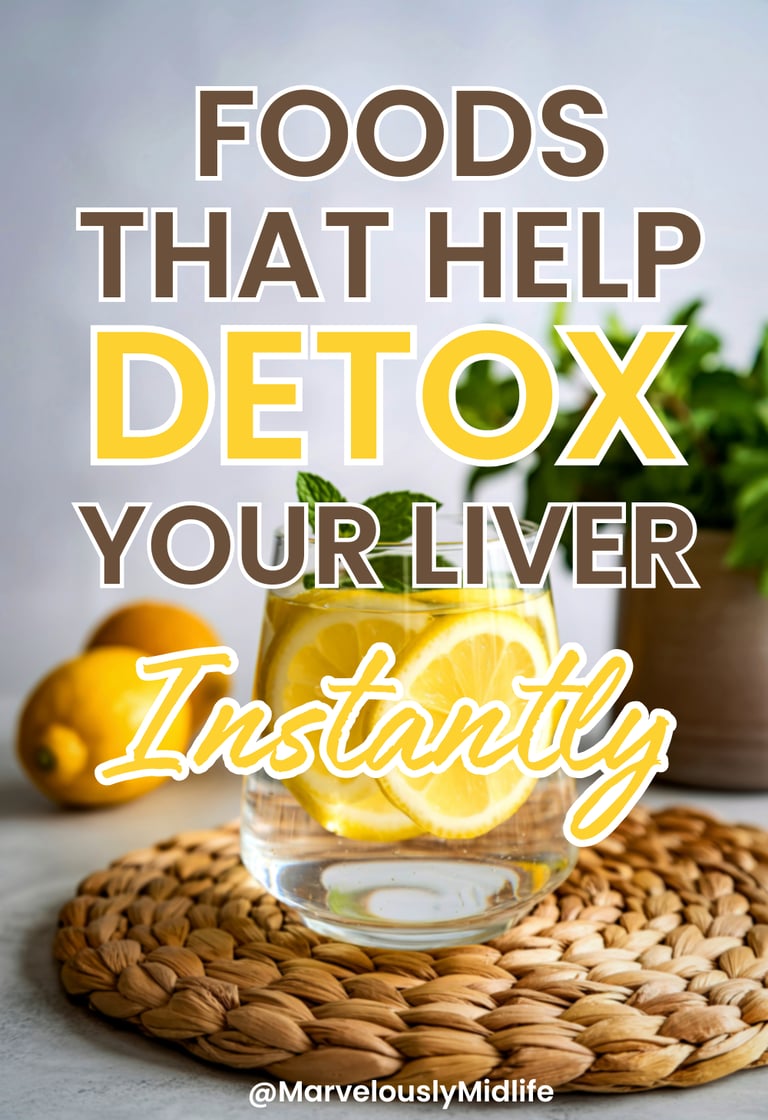
The liver loves citrus. Lemons and limes contain a specific antioxidant called eriocitrin, which has been shown to reduce liver fat and oxidative stress. Start your morning with a large glass of warm water and the juice of half a lemon to "wake up" your gallbladder and flush out the "soot" from the night before.
2. The Cruciferous "Cleanse"
The liver specifically loves cruciferous vegetables (broccoli, cauliflower, Brussels sprouts, and kale). These are high in sulfur compounds that "jumpstart" your cell's ability to move toxins out of the body and into the waste stream.
3. Strategic Liver Support Supplements
Sometimes, our toxic load is so high that we need to call in the "special forces." Targeted supplementation can provide the concentrated nutrients your liver needs to repair its delicate tissues and optimize its 500+ daily functions.
GET THE ULTIMATE MILK THISTLE & DANDELION BLEND: Milk thistle is the gold standard for liver repair. It contains silymarin, which helps protect liver cells from incoming toxins and encourages protein synthesis to build new, healthy tissue.
SHOP THE BEST NAC (N-ACETYL CYSTEINE) FOR GLUTATHIONE PRODUCTION: NAC is a precursor to glutathione, your body’s "master antioxidant." By boosting glutathione, you help your liver neutralize the heavy hitters like MSG and RCOs before they can cause damage.
GET THE TOTAL LIVER DETOX COMPLEX: A comprehensive formula that combines artichoke extract, beet root, and alpha-lipoic acid to support bile flow and systemic detox. Perfect for women who are ready for a reset.
Connect
Contact
info@marvelouslymidlife.com
© 2025. All rights reserved.
DISCLAIMER: As an Amazon associate and affiliate for other brands, I earn commissions from qualifying purchases.