A Quick Note: I occasionally include affiliate links. As an Amazon Associate, I earn from qualifying purchases at no extra cost to you.

The Simple, Cheap Fiber Trick for Better Gut Health and Metabolism
Discover the simple, cheap fiber trick for better gut health and metabolism! 🌿 Learn how psyllium husk can lower blood sugar, manage insulin resistance, and help midlife women reclaim their energy naturally. ✨
3/5/20266 min read


If you’ve been feeling like your body is on a blood sugar rollercoaster—trapped in a cycle of afternoon energy crashes, constant cravings, and that stubborn midlife "puffiness" around your middle—I have a gut health secret for you. It isn’t a fancy, $100 supplement or a complicated prescription. It’s cheap, it’s highly effective, and it’s likely sitting on a shelf in your local grocery store right now: Psyllium Husk Fiber. 🌿
Psyllium husk is my #1 "budget-friendly" recommendation for a total metabolic reset. This is the exact brand I use every morning to keep my blood sugar stable and my gut happy: My Favorite Psyllium Husk ✨
For a long time, I thought blood sugar management was just about what I didn't eat (goodbye, pasta). But the real "magic" happened when I focused on what I was adding. I discovered that the key to mastering my biology wasn't just willpower; it was about fixing the "communication" between my gut and my insulin.
You see, in midlife, our bodies can become a bit "deaf" to the hormone insulin. This is called insulin resistance. When this happens, your pancreas has to pump out more and more insulin just to keep your blood sugar stable. Not only does this leave you feeling perpetually fatigued and "hangry," but it tells your body to store fat—especially around your waist—instead of burning it for fuel. 📉
By using this simple fiber trick, I was able to create a "gel" in my digestive tract that slowed down glucose absorption. This didn't just lower my blood sugar; it gave my gut the reset it needed to finally boost my metabolism and clear the brain fog.
If you’re ready to stop the "white-knuckle" approach to dieting and start using a tool that actually works with your biology, let’s talk about how this one simple ingredient can change your healthiest chapter yet. ✨
The Role of Fiber in Regulating Blood Sugar
Fiber plays a crucial role in regulating blood sugar levels and enhancing insulin sensitivity, making it an essential component of a healthy diet. Dietary fiber is primarily categorized into two types: soluble and insoluble fiber, each of which has distinct impacts on digestion and glucose metabolism. Soluble fiber dissolves in water, forming a gel-like substance that slows digestion and the absorption of glucose. This gradual process helps prevent rapid spikes in blood sugar levels, which is particularly beneficial for individuals with insulin resistance.
Soluble fiber is found in various foods, such as oats, beans, lentils, fruits, and vegetables. These fibers not only enhance satiety but also contribute to improved gut health by promoting the growth of beneficial gut bacteria. The fermentation process of soluble fiber produces short-chain fatty acids, which have been shown to improve insulin sensitivity, ultimately benefiting metabolic health. In contrast, insoluble fiber does not dissolve in water, providing bulk to the digestive system, thereby facilitating regular bowel movements. While it does not directly influence blood sugar levels as significantly as soluble fiber, it contributes to overall gastrointestinal health.
Incorporating a higher intake of dietary fiber can be advantageous for individuals seeking to manage their blood sugar levels. It mitigates the effects of carbohydrate consumption by slowing down the rate at which sugar enters the bloodstream. As a result, this can lead to a more stable blood glucose profile and decreased insulin demand. Furthermore, a high-fiber diet has been associated with a lower risk of developing Type 2 diabetes and may aid in weight management, another key factor in combating insulin resistance.
Understanding the different types of fiber and their function can empower individuals to make informed dietary choices, promoting better blood sugar control and overall metabolic health. For optimal benefits, one should aim to include a variety of fiber-rich foods in their daily diet.
The Strategic Approach to Fiber Intake
Increasing fiber intake is crucial for enhancing overall health and effectively lowering blood sugar levels, which is key to reversing Insulin Resistance. While we all know to eat foods higher in fiber like whole grains and fruits and vegetables, the recommended daily fiber intake for metabolic health is typically between 30 to 40 grams.
The challenge is that achieving this target can be incredibly difficult by eating whole grains and vegetables alone without consuming an excessive volume of food or calories.
This is why, to truly make a difference in your Insulin Resistance, you should consider supplementing your fiber intake.
Supplementing Fiber for Blood Sugar Control
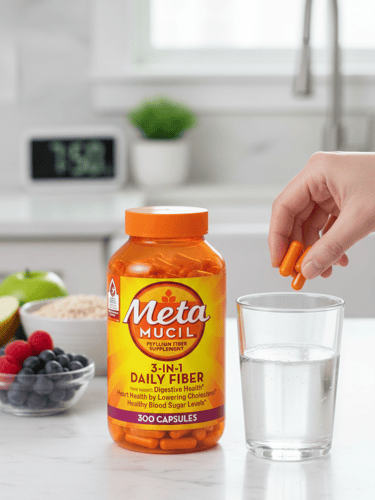
For a powerful, targeted approach to managing your blood sugar after meals, I recommend using psyllium husk fiber capsules (like Metamucil capsules).
Taking psyllium husk fiber before meals works by forming a thick, gel-like texture in your stomach. This slows down the digestion and absorption of carbohydrates, which, in turn, helps flatten the post-meal glucose spike. This simple strategic supplement can be one of the most effective tools in your diet plan to manage Insulin Resistance and support overall wellness.
My Personal Proof: The A1C Transformation
I can tell you firsthand how powerful this strategy is. I committed to taking a full serving of psyllium husk fiber before eating my four major meals each day.
A Critical Safety Note: Because psyllium husk fiber expands rapidly, it is absolutely essential to take your serving with a full 8-ounce glass of water (or more!) immediately. This prevents the fiber from lodging and expanding in your throat, which can cause choking. Always take with plenty of fluid.
The impact on my metabolic health was profound. In just six months, I was able to lower my A1C (a 3-month average of blood sugar) from 5.5 to 4.9. That shift moved me from pre-diabetic territory into the optimal range, simply by strategically using fiber to manage my carbohydrate digestion.
This shows the incredible potential of consistent fiber supplementation. However, while this was my personal result, please remember that individual results may vary. Always consult with your doctor before making significant changes to your supplement regimen, especially if you have a medical condition. Focus on this simple, consistent step and watch your health markers begin to change!

While the blood sugar benefits of psyllium husk are incredible, the real magic happens in your gut. Think of psyllium husk as the "multi-tasker" of the fiber world—it doesn't just pass through you; it actively repairs the environment where your metabolism lives.
The "Gel" Effect: A Rest Day for Your Digestion
Psyllium is a soluble fiber, meaning it absorbs water and turns into a thick, viscous gel. As this gel moves through your small intestine, it acts like a gentle "buffer."
Slows Nutrient Absorption: By thickening the contents of your stomach, it prevents those sharp spikes in glucose that lead to insulin crashes.
Lubrication and Transit: It adds bulk and moisture to your stool, making it the most effective (and natural) way to keep things moving regularly—which is often a struggle as our hormones shift in midlife.
Fueling Your "Metabolic Garden"
We can’t talk about metabolism without talking about your microbiome. Your gut is home to trillions of bacteria that dictate how you store fat and how you feel. Psyllium husk is a powerful prebiotic, meaning it is the preferred "food" for the beneficial bacteria in your gut.
When these good bacteria ferment psyllium fiber, they produce Short-Chain Fatty Acids (SCFAs) like butyrate. This is a game-changer for midlife health because SCFAs:
Strengthen the Gut Barrier: They help prevent "leaky gut," which can lead to the systemic inflammation that makes weight loss feel impossible.
Signal Fullness: They help trigger the release of hormones that tell your brain you are satisfied, naturally silencing that "3 PM snack monster."
The Cleanup Crew
Think of psyllium husk as a "soft broom" for your colon. As it moves through, it binds to waste products, including excess bile acids and old hormones (like estrogen) that your body needs to clear out. By helping your body detoxify efficiently, psyllium reduces the internal "sludge" that can leave you feeling heavy, bloated, and sluggish.
To wrap this up, the beauty of the psyllium husk secret is that it doesn’t require a total lifestyle overhaul to see a difference. We often think that reclaiming our health in midlife has to be expensive or complicated, but sometimes the most profound shifts come from the simplest additions to our daily routine.
By adding this cheap and highly effective fiber trick to your morning, you’re doing so much more than just managing a number on a glucose monitor. You are feeding your microbiome, quieting the inflammation that causes "midlife puffiness," and finally giving your metabolism the stable environment it needs to thrive.
Remember, your body isn't working against you; it’s just waiting for the right tools. When you stabilize your blood sugar and heal your gut, you stop fighting your biology and start fueling your healthiest chapter yet. ✨
Connect
info@marvelouslymidlife.com
© 2025. All rights reserved.
DISCLAIMER: As an Amazon associate and affiliate for other brands, I earn commissions from qualifying purchases.