A Quick Note: I occasionally include affiliate links. As an Amazon Associate, I earn from qualifying purchases at no extra cost to you.
Strength Training 101: Build Lean Muscle and Confidence in Midlife
Ditch the "move more, eat less" cardio trap. Discover how weight lifting for women over 40 boosts metabolism, protects bone density, and reveals your strongest self.
5/1/20267 min read
Do you feel like you’re working twice as hard for half the results? It isn’t your imagination and it certainly isn’t your fault.
For many of us, the "hamster wheel" cardio cycle that worked in our 20s starts to feel like a dead end once we hit 40. You’re moving more, you’re eating less, and yet the scale is stubborn while your body composition shifts in ways that feel… well, unfamiliar.
Here’s the midlife truth: You can’t cardio your way to a toned, powerful physique anymore. You have to build it.
Weight lifting is the "secret weapon" for the modern midlife woman. It’s the tool that allows us to opt-out of muscle loss, fire up a sluggish metabolism, and protect our bone density so we can stay vibrant and capable for decades to come.
In this beginner’s guide, we’re stripping away the gym intimidation. We’ll decode the lingo, compare the gear, and give you a simple 3-day split designed to fit your busy life. It’s time to stop shrinking and start sculpting.
Why Weights? (The Midlife Muscle Mandate)
Before we pick up a single dumbbell, we have to talk about why this matters more now than it did in your 20s.
The Battle Against Sarcopenia
Starting in our 30s, and accelerating after 40, women begin to lose muscle mass—a process called sarcopenia. If you don't actively work to keep your muscle, your body replaces it with fat. This is why the scale might stay the same, but your clothes start fitting differently. Weight lifting is the only way to "opt-out" of this process.
Bone Density and Longevity
As estrogen levels dip during perimenopause and menopause, our bone density takes a hit. Lifting heavy things puts "good stress" on your bones, signaling your body to deposit more minerals and keep your skeleton strong. It’s the best defense we have against osteoporosis.
The Metabolic Fire
Muscle is metabolically expensive tissue. This means it takes more calories for your body to simply maintain muscle than it does to maintain fat. By building lean muscle, you are essentially increasing your "passive income" of calorie burning. You burn more calories while you’re sleeping, reading, or watching Netflix.
Nutrition & Recovery: The Midlife Muscle Toolkit
Before we pick up a single dumbbell, we have to get one thing straight: You don’t build muscle while you’re lifting; you build it while you’re sleeping.
If you don’t support your workouts with the right fuel, you’re essentially spinning your wheels on a treadmill that’s going nowhere. To build lean muscle in midlife, we need to work with our changing biology, not against it. Think of these three supplements as your "metabolic insurance policy" to help you see results faster and feel less sore while doing it.
The Big Three for Faster Results
High-Quality Protein Powder 🥤
The Why: Protein is the literal building block of muscle. For women over 40, hitting a higher protein target is the fastest way to signal to your body that it’s safe to burn fat and keep muscle. It also keeps you full longer, making sugar-free living much easier.
How to Use: Aim for 25–30 grams at every meal. A scoop in your morning smoothie or a post-workout shake is the easiest way to close the gap.
Try This: Clean Simple Eats Whey Protein Powder (Clean, high-protein, and actually tastes good!)
Kion Aminos (EAAs) ⚡
The Why: Essential Amino Acids (EAAs) are like "pre-digested" protein. They hit your bloodstream almost instantly to stop muscle breakdown (catabolism)—which is a major concern as estrogen levels shift. They provide cellular energy without the sugar crash of traditional sports drinks.
How to Use: Mix one scoop into your water and sip it during your workout or first thing in the morning on an empty stomach to kickstart your recovery.
Try This: Kion Aminos
Creatine Monohydrate 🔥
The Why: Don't let the name scare you—this is the most researched supplement on the planet. It won't make you "bulky." Instead, it helps your muscles recycle energy faster so you can squeeze out those last two reps that actually trigger muscle growth. It’s also incredible for brain health and bone density.
How to Use: Take 3–5 grams daily. It doesn't matter what time of day you take it; consistency is the key. Stir it into your coffee, tea, or your protein shake.
Try This: Momentous Creatine or any high-quality Creapure® Monohydrate.
Rest is Not Optional
If you wake up feeling sore, congratulations—that’s DOMS (Delayed Onset Muscle Soreness). It’s a sign your muscles are changing! However, if you are in actual sharp pain, stop and listen to your body. Your muscles need 48 hours to recover between intense sessions. This is why our 3-day split is so effective: it gives your body the grace to rebuild stronger than before
Track your progress and stay motivated with my favorite fitness journal: 👇
Decoding the Weight Room Lingo
The gym has its own language. If you don’t know your "reps" from your "sets," it’s easy to feel like an outsider. Let’s break down the basics so you can walk in with confidence.
Sets and Reps
Rep (Repetition): One complete motion of an exercise (e.g., one squat).
Set: A group of consecutive repetitions (e.g., doing 10 squats, resting, then doing 10 more equals 2 sets of 10 reps).
The RPE Scale (Your Secret Weapon)
One of the biggest mistakes beginners make is not lifting "heavy enough." But "heavy" is relative. This is where the RPE Scale (Rate of Perceived Exertion) comes in. It’s a 1-10 scale of how hard a set feels.
For most of our workouts, we want to live in the RPE 7-8 range. If you finish a set of 10 and feel like you could have done 20, the weight is too light. Don't be afraid of the "struggle" in those last two reps!
Compound vs. Isolation Exercises
Compound: Moves that use multiple joints and muscle groups (e.g., Squats, Deadlifts, Overhead Press). These give you the most "bang for your buck."
Isolation: Moves that target one specific muscle (e.g., Bicep Curls, Leg Extensions). Great for "polishing," but not the main course.
Machines vs. Free Weights (Where Should You Start?)
This is the great debate of the weight room. The truth? Both have a place in your routine.
The Case for Machines
Machines are essentially "weights with training wheels." They follow a fixed path, which makes them incredibly safe for beginners.
Pros: Harder to mess up the form; great for isolating specific muscles; less intimidating.
Cons: They don't engage your "stabilizer" muscles (like your core); they don't always fit every body type perfectly.
The Case for Free Weights (Dumbbells, Barbells, Kettlebells)
Free weights require you to balance the weight yourself.
Pros: Engages your core and stabilizers; replicates "real world" movements (like carrying groceries); infinite variety.
Cons: Higher learning curve for form; can be intimidating at first.
My Advice: Start with a mix. Use machines to build baseline strength and free weights to build coordination and functional power.
Protect your hands and get a better grip with these lifting gloves: 👇
Weight Lifting Gloves Full Palm Protection 🧤
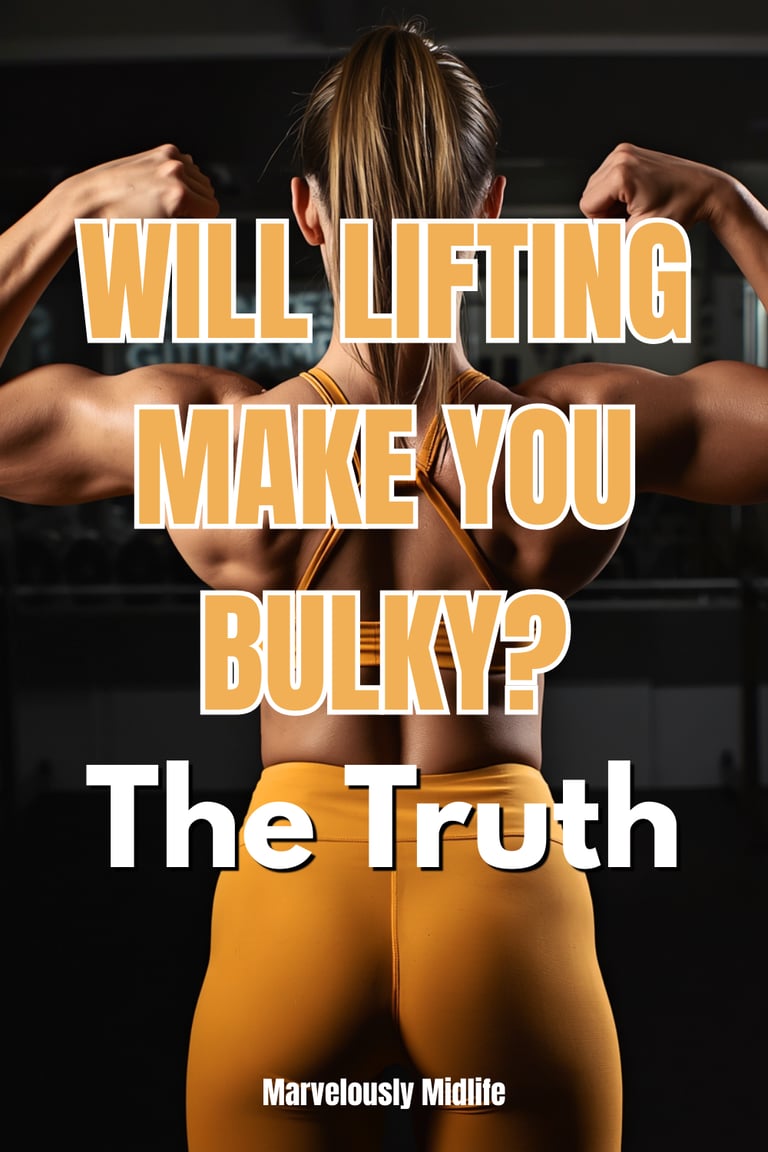
Busting the "Bulky" Myth
I hear it every single day: "I just want to tone, I don't want to get bulky."
Listen to me clearly: You will not wake up looking like a professional bodybuilder by accident. Women do not have the natural testosterone levels to build massive amounts of muscle without extreme dieting, specific supplementation, and years of incredibly heavy lifting. When you lift weights, you aren't "bulking up"—you are "firming up." That "toned" look you see on celebrities? That is simply muscle being revealed as body fat decreases.
Think of muscle as the "sculpture" and fat as the "shroud." Weight lifting builds the sculpture; healthy nutrition removes the shroud.
The 3-Day "Lean Muscle" Split
For the busy modern woman, a 3-day split is the "Goldilocks" of fitness. It’s enough to see incredible results, but not so much that you feel like you live at the gym. We want to allow at least one day of rest between lifting sessions for your muscles to repair and grow.
The Weekly Schedule:
Monday: Day 1 (Lower Body Focus)
Tuesday: Rest or Light Walk
Wednesday: Day 2 (Upper Body Focus)
Thursday: Rest or Yoga
Friday: Day 3 (Full Body/Functional Focus)
Weekend: Active Recovery (Hiking, Biking, Gardening)
Day 1: Lower Body (Legs & Glutes)
Goblet Squats: 3 sets of 10-12 reps (RPE 7-8)
Dumbbell Lunges: 3 sets of 10 reps per leg
Leg Press Machine: 3 sets of 12 reps
Glute Bridges: 3 sets of 15 reps
Calf Raises: 3 sets of 15 reps
Day 2: Upper Body (Push & Pull)
Dumbbell Chest Press: 3 sets of 10 reps
Seated Cable Row: 3 sets of 12 reps
Overhead Dumbbell Press: 3 sets of 10 reps
Lat Pulldown Machine: 3 sets of 12 reps
Tricep Extensions: 3 sets of 12 reps
Day 3: Full Body & Core
Deadlifts (Dumbbell or Kettlebell): 3 sets of 8-10 reps
Push-Ups (Knees are fine!): 3 sets to failure
Plank: 3 rounds (Hold for 30-60 seconds)
Dumbbell Step-Ups: 3 sets of 10 reps per leg
Bird-Dog: 3 sets of 12 reps (Core stability)
Bring the gym home with this versatile set of adjustable dumbbells: 👇
ADJUSTABLE DUMBBELLS 🏋️♀️
Your First Day in the Gym (A Step-by-Step Plan)
Ready to go? Here is exactly how to handle your first day:
The Outfit: Wear something that makes you feel powerful, but comfortable. (Good shoes are a must!)
The Warm-Up: 5-10 minutes of light cardio (walking or rowing) to get the blood flowing.
The Plan: Have your workout written down on your phone or in a notebook. Don't "wing it."
The Form: If you aren't sure how to use a machine, look for the diagram on the side or ask a staff member. Most people in the gym are actually very helpful!
The Cool Down: 5 minutes of stretching. You’ve earned it.
Weight lifting isn't just about the physical changes you’ll see in the mirror—though those are pretty great. It’s about the mental shift. There is something incredibly empowering about knowing you can pick up heavy things. It builds a "can-do" attitude that spills over into every other area of your life.
Remember, you aren't competing with the 20-year-old in the spandex set. You are competing with the version of yourself that was too intimidated to try. You’ve got this, and I’m right here cheering you on.
Ready to start? Let’s get moving!
Connect
Contact
info@marvelouslymidlife.com
© 2025. All rights reserved.
DISCLAIMER: As an Amazon associate and affiliate for other brands, I earn commissions from qualifying purchases.