A Quick Note: I occasionally include affiliate links. As an Amazon Associate, I earn from qualifying purchases at no extra cost to you.
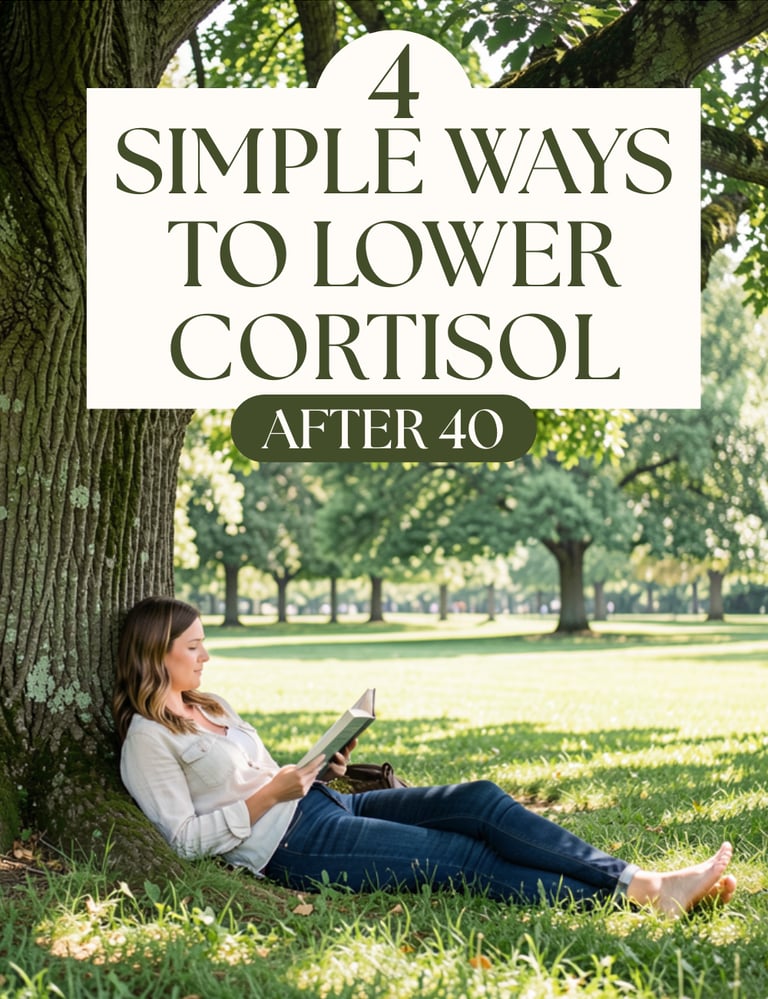
Stop the Stress: 4 Simple Ways to Lower Cortisol After 40
Struggling with midlife stress? ✨ Discover 4 simple, ways to lower cortisol naturally after 40. From Meal Breathing to EFT Tapping, learn how to signal "safety" to your body, stabilize your system, and stop the hormonal hijack. Click to read the full guide and make this your healthiest, most vibrant chapter yet!
2/25/20266 min read
If you’ve been cruising along—eating your salads, hitting the gym, and doing your best to "stay disciplined"—only to find that the scale hasn’t budged an inch (or worse, it’s creeping up), I want you to take a deep breath.
You aren’t failing. Your biology is just trying to protect you.
After years of working in the trenches with thousands of women over 40, I can tell you one thing with absolute certainty: weight management and health in midlife isn't a math problem. It’s a chemical one. If your body feels like it’s under siege, it will hoard resources and stay in a state of high alert, no matter how many calories you cut or how many miles you run. When your cortisol levels are high, your body will hold onto your body fat no matter what you do.
Today, we are going to talk about how to reverse that. I’m sharing four simple, 5-minute habits that will literally flip the switch in your body from "Fight or Flight" to "Rest and Repair." These aren't theories from a textbook; these are field-tested strategies that work in the real world to lower cortisol and reclaim your vitality.
Why Your Body is Stressed
Before we get into the "how," we have to understand the "why." If you're doing everything right but seeing zero results—or feeling "tired but wired" all the time—the culprit is usually one of three invisible factors that keep your cortisol peaked.
1. Systemic Inflammation
This is the silent fire in your body. Inflammation increases adrenaline and cortisol, which in turn spikes your insulin. When insulin is high, your body is effectively locked out of its own energy stores. You can't burn what you can't access, and high cortisol is the guard at the gate.
2. Thyroid & Hormone Imbalances
Our thyroid is the master of our metabolism, but it is incredibly sensitive to stress. When the thyroid is sluggish—a common occurrence during the perimenopause transition—everything slows down. Your body becomes less efficient at processing energy and more efficient at storing it.
3. The Cortisol Trap
Cortisol is a hormone that is necessary for our survival. In the "Sweet Spot," it helps us wake up and gives us energy. But when it stays elevated for too long, it sends a powerful survival signal to your body to store fat specifically around your belly and hips as "survival insurance." It’s your body’s way of preparing for a famine that isn't coming.
The habits I’m about to show you are designed to bring your cortisol and adrenaline back into that "Sweet Spot" instantly.
Meal Breathing (The 60-Second Metabolic Prime)
This sounds almost too simple to work, but the science of the nervous system doesn't lie. Most of us eat in a "Sympathetic" state—the "Fight or Flight" branch of our nervous system. We’re standing at the kitchen counter, scrolling through stressful emails, or rushing through a lunch break in the car.
When you eat while your nervous system is in this state, your body doesn't prioritize digestion. It prioritizes survival. Blood is diverted away from your gut and toward your limbs. This means the food you eat is more likely to be processed poorly, leading to bloating and the storage of energy in fat cells rather than being used for fuel.
How to do "Meal Breathing"
For exactly one minute before you take your first bite, you are going to perform this exercise to signal safety to your brain:
Nose Only: Close your mouth. All breaths must go through the nose. Nasal breathing is a direct "off-switch" for the stress response.
The 12-Second Rhythm: You want to take exactly five breaths over the course of one minute.
The Count: Inhale for 6 seconds, and exhale for 6 seconds. Don't rush. Feel your belly expand, not your chest.
Why this works
This specific rhythm instantly pulls you out of "fight or flight" and drops you into the Parasympathetic state (Rest and Digest). By dropping your cortisol right before you eat, you prime your body to utilize the nutrients correctly. You are telling your body: "We are safe. We can relax. We can digest."
EFT Tapping (The Emotional Circuit Breaker)
Emotional Freedom Technique, or EFT, is like acupuncture without the needles. It’s a series of acupressure points you tap on to physically flatten out your emotional response to stress. If you find yourself reaching for snacks when you're stressed, or if you're a "tired-but-wired" sleeper, EFT is your secret weapon.
When you get stressed, your amygdala—the fear center of your brain—fires off. Tapping sends a physical signal to the amygdala telling it that there is no immediate danger.
The EFT Tapping Sequence
When you feel a craving hit or your stress levels rising, spend two minutes going through this sequence. Use two fingers to tap firmly but gently about 5–7 times on each point:
The Karate Chop Point: The outer fleshy edge of your hand. Start by stating your truth: "Even though I'm stressed and want to eat everything in the pantry, I deeply and completely accept myself."
Top of the Head: Right in the center.
Eyebrow: At the beginning of the eyebrow, just above the nose.
Side of the Eye: On the bone at the outer corner of the eye.
Under the Eye: On the bone directly under the pupil.
Under the Nose: Between the nose and upper lip.
Chin Point: In the crease between your lower lip and chin.
Collarbone Point: Just below the hard bone of your collarbone.
Under the Arm: About four inches below the armpit (on the bra line).
The Result
You will feel a physical "shift" in your body. Your heart rate slows, your breath deepens, and that frantic "need" to eat or stress out dissolves. You’ve just successfully lowered your cortisol and signaled to your brain that the "emergency" is over.
The 2-Minute Post-Meal Walk
We’ve been conditioned to believe that we need to spend an hour on the elliptical to see health results. But in midlife, long bouts of intense cardio can actually spike cortisol even higher. The American Diabetes Association suggests a much more effective, cortisol-conscious approach.
Studies show that just 2 to 5 minutes of light movement after a meal is enough to significantly flatten out your blood sugar response.
The "Sugar Sponge" Effect
When you eat, your blood sugar rises. If it spikes too high, your body releases a flood of insulin to bring it down. As we know, high insulin and high cortisol are the "fat-storage" duo. By simply walking around your house, your office, or down the block for two minutes after you eat, your muscles "soak up" that excess glucose before it has a chance to trigger a major hormonal surge.
The Rule: No Gym Required
You don't need to change your clothes. You don't need to sweat. Just move. Whether it’s pacing while you’re on a phone call or taking a quick lap around the garden, those two minutes are a powerful signal to your body to keep blood sugar stable and cortisol low.
Stop the Starvation (Finding the Sweet Spot)
This is the hardest pill for most women to swallow, but it’s the most important. In my coaching, I have never once had to tell a client they were overeating. In fact, 9 out of 10 women in midlife are chronically undereating.
When you restrict calories, cut out all carbs, or do excessive intermittent fasting, you are putting your body in a state of perceived famine. Remember what we said about cortisol? Chronic undereating keeps your cortisol levels high because your body thinks it is fighting for survival.
The Survival Slowdown
Initially, you might lose a few pounds through sheer restriction, but eventually, the body "conserves." It slows your metabolism to a crawl and begins to store every single calorie you do eat as fat—usually around your belly—to ensure you have "fuel" for the future.
The "Sweet Spot" Strategy
To lower cortisol, you need to give your body enough resources to function. You have to send a signal of abundance, not scarcity.
Focus on Protein: Hitting your protein goals is non-negotiable for muscle maintenance and metabolic health. Protein is also incredibly grounding for the nervous system.
Identify the "Crash": If you feel cold all the time, have thinning hair, or can't sleep through the night, these are loud signals from your body that you are undereating.
Eat for Safety: When you feed your body enough high-quality fuel, your nervous system relaxes. Only when the body feels "safe" will it let go of the excess resources it’s been hoarding.
Why Consistency Trumps Intensity
We are so used to the "all or nothing" mentality. We think if we can't do a 60-minute workout, it’s not worth doing. But cortisol doesn't care about your intensity; it cares about your consistency.
The woman who does one minute of Meal Breathing before every dinner and takes a two-minute walk afterward is sending a more powerful health signal to her body than the woman who destroys herself in a HIIT class once a week but spends the rest of her time in a "stressed-out" state.
These four habits—Meal Breathing, EFT Tapping, the 2-Minute Walk, and Proper Fueling—are the foundation of a life where your biology works with you instead of against you.
Lowering your cortisol and reclaiming your health in midlife isn't about doing more. It’s about being smarter and more compassionate toward your own biology.
By implementing these four simple habits, you are creating a massive ripple effect in your hormonal health. You are teaching your body that it is no longer under siege. You are proving to your nervous system that it is safe to rest, safe to digest, and safe to thrive.
You’ve spent decades taking care of everyone else—the kids, the career, the household. It’s time to send those signals of safety back to yourself. Take that deep breath. Start with just one minute of breathing today. You’ve got this.
Connect
Contact
info@marvelouslymidlife.com
© 2025. All rights reserved.
DISCLAIMER: As an Amazon associate and affiliate for other brands, I earn commissions from qualifying purchases.