A Quick Note: I occasionally include affiliate links. As an Amazon Associate, I earn from qualifying purchases at no extra cost to you.
Science-Backed Insomnia Tips to Overcome Hormonal Sleep Deprivation
Stop the cycle of midlife sleep deprivation! Learn actionable insomnia tips to deal with hormonal shifts, overcome night sweats, and get rid of brain fog today. ✨
2/28/20269 min read
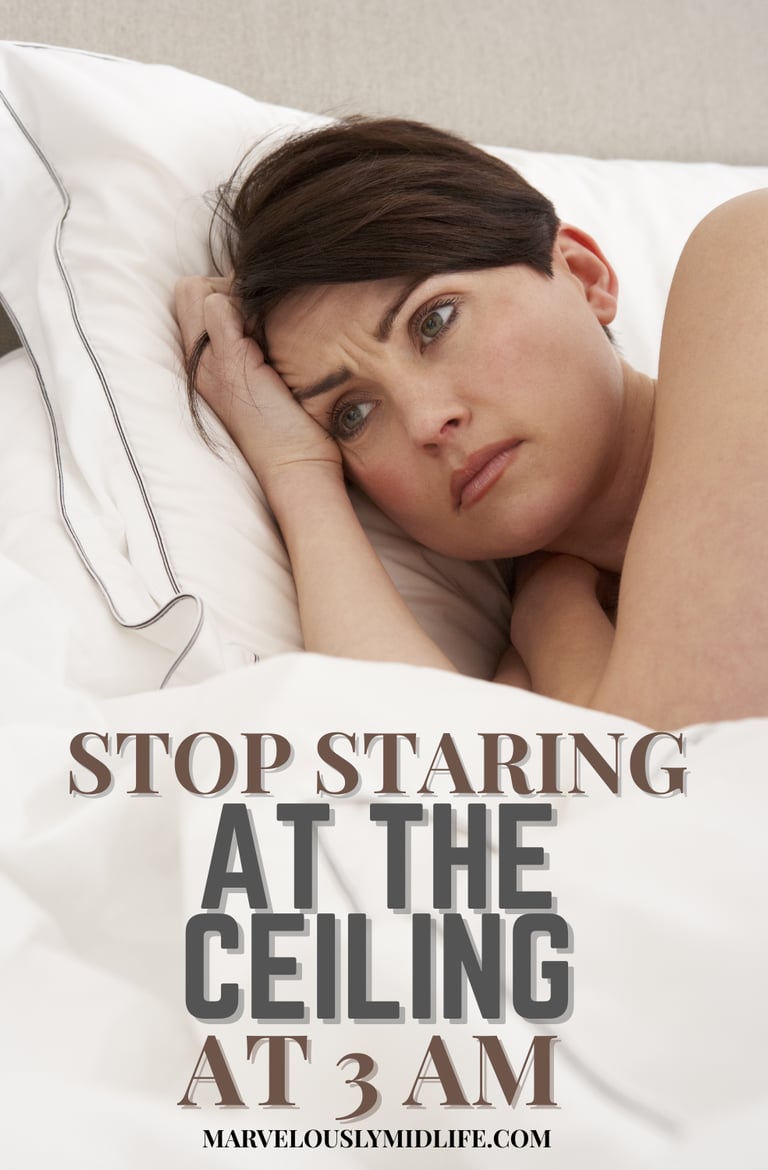
There is a specific kind of frustration that comes when your body is exhausted, but your brain refuses to surrender to sleep. If you’re a woman over 40, this isn't just "stress"—it’s a physiological desync. As your estrogen and progesterone levels fluctuate, the internal clock that governs your rest and repair begins to drift. You aren't just "having trouble sleeping"; you are experiencing a hormonal hijacking of your circadian rhythm.
When your natural "calming" hormones drop, your body becomes hyper-sensitive to cortisol, turning what should be a peaceful night into a series of 3 AM wake-up calls and racing thoughts. If you’ve been searching for insomnia tips that actually address the midlife reality, you know that generic advice like "drink chamomile tea" simply doesn't cut it. To truly learn how to overcome this cycle, you have to address the biological root: the intersection of your hormones and your nervous system.
You don’t have to accept sleep deprivation as a mandatory side effect of aging. Whether you are looking for a way to cure the midnight tossing and turning or need a practical strategy to deal with the night sweats that disrupt your peace, reclaiming your rest is the foundation of your metabolic health. This guide breaks down the essential shifts you need to get rid of the brain fog and finally access the deep, restorative sleep your body craves. It’s time to stop fighting your biology and start optimizing it for your most vibrant chapter yet.
The Science Behind Your Sleep Crisis
Listen, lack of restorative sleep is a bigger deal than just feeling tired. When you’re constantly missing out on deep sleep, it messes with everything:
Weight Gain: Chronic sleep loss ramps up your stress hormone, cortisol. High cortisol messes with your blood sugar and can cause you to store fat (hello, belly fat!). Plus, it throws your hunger hormones (leptin and ghrelin) out of whack, making you crave all the unhealthy stuff.
Brain Fog: Sleep deprivation makes it harder to focus, make decisions, and remember things. Your brain literally can’t function properly without its reset time.
Mood: Everything feels harder when you’re exhausted. Insomnia intensifies feelings of anxiety and frustration, making it tough to stay emotionally resilient.
The Role of Progesterone: Your Brain's Natural Valium
One of the primary reasons we struggle to find to help our sleep is the rapid decline of progesterone. In the years leading up to menopause (perimenopause), progesterone often drops faster than estrogen. Progesterone is responsible for stimulating GABA receptors in the brain. GABA is your "inhibitory" neurotransmitter—it’s the brake pedal for your brain. Without enough progesterone, the "brakes" fail, and you’re left with racing thoughts and a body that refuses to settle down.
The Estrogen & Temperature Connection
Estrogen also plays a vital role in thermoregulation. As estrogen fluctuates, your body’s internal thermostat becomes haywire. This leads to those dreaded night sweats. When your core body temperature spikes, it signals your brain to wake up. This is why tips for insomnia in midlife must always include environmental cooling strategies.
Holistic Tips for Insomnia: More Than Just "Sleep Hygiene"
We’ve all heard the standard advice: "don't look at your phone" and "keep the room dark." While those are important, they are often insufficient for the midlife woman. We need a more aggressive, multi-pronged approach to help our bodies remember how to rest.
1. Manage the "Cortisol Spike"
If you wake up between 2 AM and 4 AM with a racing heart, that is likely a cortisol spike. Often, this is caused by a drop in blood sugar. Because your metabolism is shifting, your body may struggle to maintain steady glucose levels through the night.
The Fix: Try a small, high-protein snack about 30-60 minutes before bed. A few almonds or a small scoop of Greek yogurt can provide enough steady fuel to keep your blood sugar stable, preventing the cortisol-induced wake-up call.
2. Light Exposure as Sleep Help
Your sleep quality tonight actually begins the moment you wake up this morning. To set your circadian rhythm, you need natural sunlight in your eyes within 30 minutes of waking. This triggers the natural suppression of melatonin and the timed release of it 12–14 hours later. If you spend your whole day in an office with artificial light, your brain never gets the "start" signal, which means it never knows when to "stop."
3. Movement Without Exhaustion
While I advocate for workouts for lean muscle, doing high-intensity cardio late in the evening can keep your cortisol elevated for hours. If you are struggling with midlife insomnia, move your heavy lifting or intense movement to the morning or early afternoon. In the evening, stick to "cortisol-conscious" movement like restorative yoga or a slow walk.
Meet Your New Best Friend: Natural Sleep Supplements
I know you want a solution that works without weird side effects or dependency. That’s why natural sleep supplements are such a game-changer for midlife sleep. They work by supporting your body’s natural sleep mechanics, not by knocking you out cold.
Key Ingredients for Hormonal Sleep Support
Look for supplements that contain these science-backed heroes:
Magnesium: This miracle mineral helps calm your nervous system by regulating the neurotransmitters that promote relaxation. It’s essential for quieting a stressed mind. For midlife women, Magnesium Glycinate is usually the gold standard because it is highly absorbable and gentle on the stomach.
L-Theanine: Found in tea, this amino acid promotes alpha brain waves, which is the state your brain is in when you’re meditating or deeply relaxed. It reduces anxiety without making you drowsy. It’s perfect for that "busy brain" that won't shut off.
Valerian Root & Chamomile: These classic botanicals have been used for centuries. Valerian root helps boost GABA (your body's 'brake pedal' neurotransmitter), and chamomile acts as a mild sedative to improve sleep quality.
Ashwagandha: This adaptogen is a powerhouse for midlife women. It helps your body manage stress and lowers cortisol levels over time, making it easier to stay asleep once you finally drift off.
Relaxium Sleep Aid
If you're looking for an all-in-one product that uses a blend of these key ingredients, a popular option many women try is Relaxium Sleep Aid.
What sets Relaxium apart from a basic melatonin gummy is the synergy of its ingredients. Many "sleep aids" on the market rely solely on high doses of melatonin, which can actually cause vivid nightmares or a "hangover" feeling the next day. Relaxium takes a more sophisticated approach by addressing both the mind and the muscles.
The "Valerest" Difference
Relaxium contains a proprietary blend called Valerest. This is a clinically studied extract of Valerian root and hops that works to induce sleep safely. In midlife, we often need that extra "nudge" to transition from our high-stress days into a restful night, and this blend is designed specifically for that purpose.
My Personal Experience: I’ve been down the road of trying different sleep supplements—some left me feeling so groggy and hungover the next morning that I couldn't function! When I found Relaxium, I realized that a full dose was just too much for me. I'm petite (you know how it is when you're short!), so I found that taking just half a dose (one capsule) is my sweet spot. It provides the hormonal sleep support I need without any morning drowsiness. This experience highlights that sometimes less is definitely more when it comes to supplements.
Here’s the rundown on what the product offers and what's inside:
Triple-Action Formula: It's designed to help you fall asleep faster, stay asleep longer, and wake up revitalized and non-groggy by calming the mind and relaxing the body.
Key Ingredients: It contains a synergistic blend of many of the ingredients we just discussed, including Melatonin, Magnesium, Passionflower, GABA, Ashwagandha, and Chamomile.
Added Benefit: The brand emphasizes that getting better sleep quality is crucial for supporting a stronger immune system—a huge plus for midlife health!
Deep Dive: Why Relaxium Works for the Midlife Body
When we look for sleep help, we aren't just looking for a "knockout pill." We are looking for something that respects our delicate hormonal balance. Relaxium’s formula is particularly effective for women over 40 because it tackles the three pillars of sleep:
Relaxing the Body: Through Magnesium and Passionflower, it helps ease the physical tension that often leads to restless legs or muscle tightness.
Calming the Mind: GABA and Ashwagandha work together to quiet the mental chatter that characterizes midlife insomnia.
Regulating the Cycle: A sensible dose of Melatonin helps reset the "internal clock" that menopause often disrupts.
By using a lower dose of several ingredients rather than a massive dose of one, you reduce the risk of side effects while increasing the likelihood of deep, restorative sleep.
The Nutrition-Sleep Link: Sugar-Free & High-Protein Swaps
As someone who advocates for a sugar-free lifestyle, I cannot emphasize enough how much your diet impacts your sleep.
The Sugar-Insomnia Trap
Sugar is a massive disruptor of sleep. When you consume high-sugar snacks in the evening, your blood sugar spikes and then inevitably crashes. That crash triggers a survival response in your body, releasing adrenaline and cortisol to bring your blood sugar back up. Guess what? Those hormones wake you up. If you are serious about finding tips for insomnia, you have to look at your sugar intake.
Swap This for That:
Instead of: A bowl of cereal or ice cream before bed.
Try: A high-protein, sugar-free "Sleep Bowl." Mix some plain Greek yogurt with a scoop of chocolate collagen (sugar-free!) and a few walnuts. The protein stabilizes your blood sugar, and the walnuts provide a natural source of melatonin.
Instead of: Glass of wine (The "Midlife Sleep Thief").
Try: A "Tart Cherry Mocktail." Tart cherry juice contains natural melatonin and procyanidins that help your body use the tryptophan it already has. Mix it with sparkling water for a refreshing, sleep-supportive nightcap.
Designing Your Sleep Sanctuary: A Midlife Requirement
To truly maximize the benefits of Relaxium, you need an environment that supports rest. Your bedroom should be a sanctuary, not an extension of your office or a storage room.
The Temperature Factor
Menopause sleep problems are often temperature-driven. Your body needs its core temperature to drop by about 2–3 degrees Fahrenheit to initiate sleep.
Cooling Linens: Switch to bamboo or linen sheets, which are moisture-wicking and more breathable than cotton or polyester.
The 65-Degree Rule: Sleep experts generally agree that 65°F (18°C) is the ideal temperature for deep sleep. If that feels too cold, use a heavy blanket on your feet but keep the room air cool.
The Darkness Factor
In midlife, our eyes become more sensitive to light. Even a tiny sliver of light from a digital clock or a street lamp can signal your brain to stop producing melatonin.
Blackout Curtains: These are non-negotiable for restorative sleep.
Sleep Masks: If curtains aren't enough, a weighted silk sleep mask can provide both darkness and gentle pressure to soothe your nervous system.
Your Simple Sleep Strategy: Routine is Everything
Supplements are great, but they work best when you give them a fighting chance! A consistent nighttime routine sends a clear signal to your body that it's time to rest.
Set a 'Digital Sunset': At least one hour before bed, put away all screens—phones, tablets, and TV. The blue light is a known enemy of your natural melatonin production. It tricks your brain into thinking it’s high noon. Read a physical book or listen to a podcast instead!
Calm the Body: Use that final hour for deep breathing, gentle stretching, or listening to soothing music. Dim the lights to tell your brain it’s nighttime. This is the perfect time to take your Relaxium, allowing it to begin working just as you climb into bed.
The Brain Dump: If racing thoughts are your primary struggle, keep a notebook by your bed. Before you lie down, write out everything you’re worried about or need to do tomorrow. Once it’s on paper, your brain feels "safe" to let go of the information for the night.
Emotional Resilience and the 3 AM Wake-Up Call
Even with the best supplements and routines, sometimes midlife insomnia still strikes. The key is how you respond to it.
If you wake up at 3 AM:
Don't check the clock. Seeing the time triggers a math equation in your head ("If I fall asleep now, I only get 3 hours...") which creates immediate stress.
Stay in the dark. If you have to get up, keep the lights low.
Practice 4-7-8 Breathing. Inhale for 4 seconds, hold for 7, and exhale slowly for 8. This is a "hack" for your vagus nerve that physically forces your body out of "fight or flight" and back into "rest and digest."
The Long-Term View: Consistency Over Perfection
Reclaiming your sleep after 40 isn't a "one and done" event. It is a series of small, consistent choices. Choosing a high-protein dinner, setting a digital sunset, and finding the right natural sleep supplement like Relaxium are all parts of the puzzle.
When I started my journey, I wanted a magic pill. What I found was that while Relaxium was the catalyst that finally allowed me to sleep, the lifestyle changes I made around it were what made that sleep restorative.
By tackling your hormones, adding targeted supplements, and sticking to a routine, you absolutely can reclaim your restorative sleep and your midlife energy! You don't have to accept exhaustion as your "new normal." This chapter of your life can be your healthiest and most well-rested yet.
Final Thoughts & Next Steps
If you're ready to stop the cycle of sleep deprivation, I highly recommend starting with one or two of these tips for insomnia.
Try the high-protein snack.
Set your digital sunset.
Grab a bottle of Relaxium and find your "sweet spot" dosage (remember, mine was just one capsule!).
You deserve to wake up feeling vibrant, clear-headed, and ready to take on the world. Sleep is the foundation of everything—your mood, your muscle, and your midlife glow. Let’s make tonight the night you finally get the rest you deserve.
DISCLAIMER: As an Amazon associate and affiliate for other brands, I earn commissions from qualifying purchases. Always consult with your healthcare provider before starting any new supplement, especially during midlife transitions.
Connect
info@marvelouslymidlife.com
© 2025. All rights reserved.
DISCLAIMER: As an Amazon associate and affiliate for other brands, I earn commissions from qualifying purchases.