A Quick Note: I occasionally include affiliate links. As an Amazon Associate, I earn from qualifying purchases at no extra cost to you.
Mastering Step Ups For Glutes To Build Stronger More Sculpted Glutes
Ready to level up? Discover why step ups for glutes are the king of the lower body press and how to integrate them into a 90-day glute workout women designed for real, tangible growth.
3/10/20268 min read
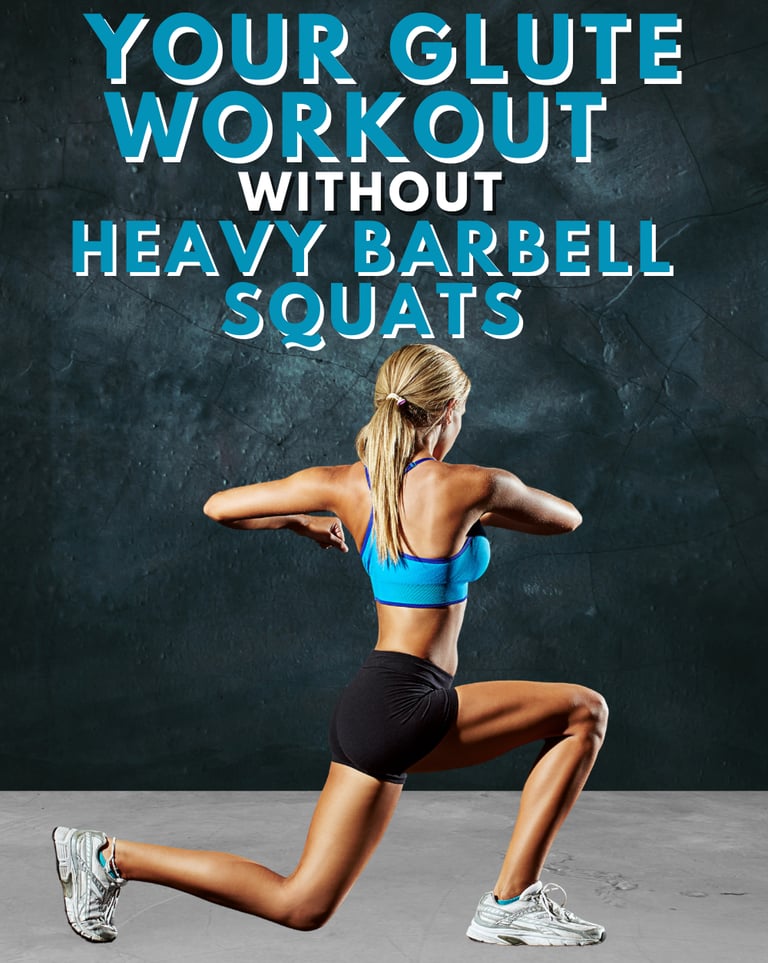
Building a powerful, sculpted set of glutes is about so much more than just aesthetics. As we’ve discussed when building our "Mental Architecture," the way we move and the way we feel in our bodies is the command center for our daily confidence. But for many of us, the road to glute growth feels blocked by one major hurdle: traditional heavy lifting that leaves our lower backs screaming.
If you’ve ever felt like your glute training was at a standstill—or worse, if you’ve been "cake to pancake" due to injury or a desk job—this is the blueprint you’ve been waiting for. Based on the expertise of biomechanics specialist Jeremy Ethier and the "Glute Guy" himself, Brett Contreras, we are diving deep into how to architect your glutes without the soul-crushing (and back-breaking) heavy barbell squats.
When it comes to designing an effective glute workout women actually want to stick with, we have to talk about the power of the step up for glute growth.
This isn't just about "working out." This is about precise, strategic movement. We are going to master the Step-Up, the Hip Thrust, and the Hinge in a way that prioritizes your safety while maximizing your results. 🏗️🍑
The 4 Pillars of Glute Architecture
Before we pick up a single weight, we have to understand the framework. Brett Contreras recommends a four-pattern approach to well-rounded glute development. If you are missing one of these, you are leaving growth on the table:
The Lower Body Press: Think squats or step-ups. This emphasizes the glutes in a stretched position.
The Lower Body Hinge: Think deadlift variations. This targets the "shelf" and the connection between your glutes and hamstrings.
The Squeeze: This is the hip thrust. It’s where the glutes are under the most tension at the top (shortened position).
Abduction: Moving the legs away from the midline. This hits the glute medius and minimus (the "side glute").
Let’s break down the "secret weapon" of this list: The Glute-Dominant Step-Up.
Mastering the Glute-Dominant Step-Up
If there is one exercise that is consistently performed incorrectly in the gym, it’s the step-up. Most people treat it like a cardio move, bouncing off their back foot and using momentum to propel themselves upward. If you want to grow your glutes, you have to stop "stepping" and start "pressing."
1. The Setup: Height Matters
The first mistake is using a box that is too high. If your hip is tucked under and your back is rounded just to get your foot on the box, you’ve already lost the glute engagement. Aim for a height where your thigh is roughly parallel to the ground when your foot is on the box. This creates the most "hip extension torque"—essentially, it puts your glutes in the optimal position to produce force.
2. The Vertical Shin Rule
This is the "aha!" moment for glute growth. To shift the focus away from your quads and onto your glutes, your shin must remain mostly vertical. If your knee tracks far forward over your toes, your quads are taking over the movement. By keeping the shin straight up and down, you force the hips to reach back, stretching the glute fibers.
3. The "Leaning Forward" Secret
To truly load the glutes, you must lean your torso forward. Think about reaching your hips back as you descend. This forward lean increases the lever arm for the glutes, making them work significantly harder to pull you back to a standing position.
4. The "No-Bounce" Descent
The "gain" happens on the way down. Control the descent for 3 full seconds. When your back foot touches the floor, do not bounce. Instead, imagine the floor is made of glass. Lightly tap it with your toe, and then immediately use the leg on the box to drive yourself back up. If you find yourself pushing off the floor with your back calf, the weight is too heavy or the box is too high.
The Box Squat: A Back-Friendly Alternative
For those of us with sensitive backs or previous injuries, a traditional barbell back squat can feel like a gamble. The solution? The Glute-Dominant Box Squat.
By sitting back onto a box (or bench), you achieve two things. First, it forces a vertical shin, which we now know is the key to glute recruitment. Second, it limits the range of motion to a point where your lower back is less likely to "wink" or round at the bottom.
The Form Hack: When you sit on the box, don't just collapse. Maintain tension, pause for a split second, and then drive through your heels to stand. Keeping the weight (like a dumbbell) in a goblet position in front of your chest can actually act as a counterbalance, allowing you to sit even further back into your hips without falling over.
The Single-Leg Hinge: Targeting the "Shelf"
Deadlifts are incredible, but they require significant load to be effective, which can be taxing on the spine. The Single-Leg Dumbbell Deadlift is the "cheat code" for glute growth. It provides the same stimulus as a heavy deadlift but with a fraction of the weight.
The Critical Tweak: Most people perform these with a straight leg, which turns it into a hamstring exercise. To make it glute-dominant, you must keep a slight bend in the knee. As you hinge forward, keep the weights close to your shins and focus on pushing your hips back toward the wall behind you. Do not stand up all the way to a "locked" position if you want to keep constant tension on the muscle. Stop just shy of vertical and go right back into the next rep.
The Hip Thrust: The "Scoop" Method
You cannot talk about glutes without mentioning the hip thrust. It is the king of the "squeeze" pattern. However, the most common complaint is lower back pain. To fix this, you need to implement the Scoop Method.
Chin Down: Instead of looking at the ceiling, tuck your chin to your chest.
Ribs Down: Keep your core braced so your ribs don't flare out.
The Pelvic Tilt: As you reach the top of the movement, focus on tilting your pelvis upward (a posterior pelvic tilt). Imagine you are trying to scoop your tailbone toward your chin.
By using this "scoop," you prevent your lower back from hyper-extending, which is where most injury occurs. You might not be able to go quite as high, but the squeeze in your glutes will be twice as intense.
Abduction: The Finishing Touch
Finally, we hit the side glutes. This is the "penalty-free volume." It doesn't beat your central nervous system up, so you can add more of it at the end of a workout to round out the shape.
The Pro Tip: For the seated abduction machine, try two positions.
Upright: Sitting straight up targets the upper glutes (glute medius).
Leaning Forward: Leaning your torso forward shifts the tension to the lower glutes.
By pairing these back-to-back—15 reps upright, followed immediately by 15 reps leaning forward—you ensure every fiber is addressed.
The 90-Day Philosophy: Mind over Muscle
Growth isn't just about the 60 minutes you spend in the gym; it’s about the architecture of your entire week. Here is the "bestie" advice on how to actually see results in the next 90 days:
1. Forget Soreness
We’ve been conditioned to think that if we aren't "walking like a penguin" the next day, the workout didn't count. Science tells us otherwise. Many of the most effective glute exercises (like hip thrusts) don't cause massive amounts of muscle damage or soreness. This is actually a good thing. It means you can recover faster and train your glutes with more frequency—ideally 2 to 3 times per week.
2. The Volume Ramp
Start with around 20 sets of glute-focused work per week. If you’ve been training for a while and hit a plateau, you can gradually increase this. Top-tier athletes sometimes go as high as 30–40 sets, but only if their recovery (sleep and food) is on point.
3. Overcoming "Injury Scares"
If you have a history of back pain, it’s normal to feel "spicy" or tight during a workout and freak out. Learn to distinguish between a "glute cramp" (good!) and "nerve/joint pain" (stop!). If something feels off, skip that exercise for the day. Consistency is the goal, and a three-day break to let a tight muscle relax is much better than a three-month break for a herniated disc.
The Athletic Edge
Why does this matter beyond the mirror? Powerful glutes are the engine of the human body. When you strengthen your glutes, you’ll notice:
Speed & Power: Your sprints and "jogs" will feel more explosive.
Vertical Jump: Even without practicing jumping, a stronger "posterior chain" translates directly to higher vertical and broad jumps.
Back Protection: Strong glutes take the load off your lower back. Often, "back pain" is actually just "weak glute pain."
Building a high-performing body requires more than just showing up to the gym; it requires the right "bricks" to build your internal fortress. You can have the most perfect glute-dominant step-up in the world, but without the right fuel, your muscles simply won't have the resources to grow.
Think of your nutrition as the logistical support for your architecture. If the supplies don't arrive on time, the construction stops. Here is how to fuel the build, along with the specific "supplements" I keep in my pantry to make hitting those targets easy. 🏗️🥑
THE FUELING BLUEPRINT
1. The Protein Anchor
Muscle protein synthesis (the fancy word for "muscle building") requires a steady stream of amino acids. Aim for roughly 0.7g to 1g of protein per pound of body weight. If you’re struggling to hit that 130g or 150g target through whole foods alone, a high-quality protein powder is a total game-changer. I love a clean whey isolate for post-workout or a plant-based blend if I'm feeling a bit bloated.
2. Creative Energy (Creatine)
If there is one "must-read" supplement in the fitness world, it’s Creatine Monohydrate. It is the most researched supplement on the planet. It helps your muscles produce energy during heavy lifting, allowing you to get those extra two reps that actually trigger growth. Plus, it pulls water into the muscle cell (not under the skin!), making your glutes look fuller while they recover.
3. The "Anti-Inflammatory" Edge
Hard training creates inflammation. While some inflammation is good (it signals the body to repair), chronic inflammation can stall your progress. I make sure to include high-quality Omega-3s to support joint health and recovery. It’s like putting high-grade oil in your engine—it just makes everything run smoother.
4. Electrolytes for the "Pump"
You can't get a good mind-muscle connection if you're dehydrated. To get that deep "burn" in your glutes without the fatigue, your mineral levels need to be on point. I skip the sugary sports drinks and go for a clean electrolyte powder with plenty of salt, potassium, and magnesium. It keeps my muscles "bouncy" and my energy high through the very last set.
A NOTE ON RECOVERY
Don't forget that you don't grow in the gym; you grow while you sleep. All the protein and creatine in the world won't save a body that is only getting 5 hours of shut-eye. Pair your fueling with at least 7-8 hours of quality sleep to let your "Mental Architecture" and your physical build sync up.
The 90-Day Blueprint Summary
If you’re ready to start, here is your organized "cheat sheet" for your next workout:
The journey to a "high-performing body" is a marathon, not a sprint. Focus on the form, embrace the "burn" without the "back pain," and trust the process of architecture. You are capable of building a body that is as strong as it is powerful. 🏗️✨
Connect
Contact
info@marvelouslymidlife.com
© 2025. All rights reserved.
DISCLAIMER: As an Amazon associate and affiliate for other brands, I earn commissions from qualifying purchases.