A Quick Note: I occasionally include affiliate links. As an Amazon Associate, I earn from qualifying purchases at no extra cost to you.

How to Lower Cortisol and Burn Fat While You Sleep
Stuck in a midlife metabolic stall? 🛑 Discover exactly how to lower cortisol and finally flip your fat-burn switch back to "ON." 🧘♀️ From circadian resets to liver love, here is your 5-step blueprint to reclaim your energy and manifest your strongest self yet! ✨
3/19/20265 min read
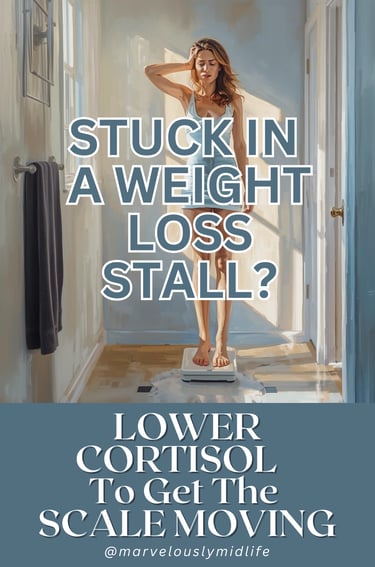
Let’s have some real talk, sister. ☕️ Have you ever felt like you were doing "all the things" right—counting every calorie, hitting the gym like a beast, and practically living on kale—yet the scale just stares back at you like it’s broken? Or maybe you’ve noticed that despite your best efforts, your midsection is holding onto a stubborn layer of "puffiness" that definitely wasn't invited to the party? 🎈🛑
If you feel like you’re hitting an invisible wall, I need you to know: You aren't crazy, and you aren't failing. You’re likely dealing with a total metabolic hijack. 🏴☠️
We often talk about weight loss like it's a simple math problem (calories in vs. calories out), but the real boss of your metabolism isn't a calculator—it’s your hormones. Specifically, it’s a hormone called cortisol. Cortisol is your body’s primary stress hormone, and when it’s out of balance, it doesn't just affect your mood; it literally dictates where your body sends fat and whether that fat is burnt for fuel or locked down for "survival." 🔐📉
Until we fix this internal environment, your body will keep prioritizing storage over strength. Let’s break down the science and get you a 5-step blueprint to flip that switch back to "ON." 💡💪
The Science: Why Cortisol is the "Fat-Storage" Queen 👑🧬
To fix the glitch, we have to understand why it exists. Cortisol isn't a "villain"; she’s actually your body's personal bodyguard. She’s designed to rise when your body perceives a threat—whether that’s a physical danger, a missed meal, or a lack of sleep. 🛡️
The "Inbox vs. The Bear" Problem 🐻
In our ancestor's days, a cortisol spike meant you were being chased by a predator. Your body would respond by dumping glucose (sugar) into your bloodstream to give your muscles quick energy to fight or flee. 🏃♀️💨 It would also shut down "non-essential" systems like your digestion and your reproductive system to save energy for the immediate crisis.
The problem? Your nervous system cannot tell the difference between a grizzly bear and a passive-aggressive email from your boss or a sink full of dirty dishes. 📧😤 Because our modern stress is constant, our cortisol levels stay high for weeks, months, or even years.
The Metabolic Rewire 🔄
When cortisol stays high, it rewires your metabolism in three dangerous ways:
The Sugar Monster: Cortisol tricks your body into thinking it needs "quick fuel" to escape, triggering intense cravings for sugar and refined carbs. 🍩🍪
Muscle Wasting: Muscle tissue is expensive for your body to maintain. In "survival mode," your body starts breaking down muscle to conserve energy, which slows your metabolism to a crawl. This is how we end up "skinny fat" or just plain exhausted. 😫
Visceral Fat Storage: Cortisol is a master at storing fat, specifically around the midsection (visceral fat). Your body does this because belly fat is the most efficient place to keep fuel that can be accessed quickly during an "emergency." 🤰🛑
Why Midlife Feels Different 🕰️✨
If you’ve noticed your body doesn't respond to diet and exercise the way it did in your 20s, there’s a massive biological reason for that. As we age, our cortisol rhythm begins to "flatten." 📉
In a healthy, young body, cortisol follows a diurnal rhythm. You get a sharp spike in the morning (the Cortisol Awakening Response) to help you feel alert. Throughout the day, it gradually falls, reaching its lowest point at night so you can fall into a deep, restorative sleep. 😴🌙
As we get older, that rhythm becomes less of a "mountain" and more of a "plateau." Instead of a clean spike and drop, you get a consistent, low-grade trickle of cortisol all day long. This leads to the "Tired but Wired" phenomenon:
You wake up feeling groggy and exhausted. 🧟♀️
You struggle with brain fog and energy crashes at 3 PM. 🌫️
You feel wide awake and restless at night, unable to shut your brain off. 🦉
Step 1: Reset Your Circadian Rhythm (The 30% Fix) ⏰🌅
The first step to lowering cortisol is fixing the clock. Your hormones rely on light and timing to know when to work and when to rest. Fixing this can reduce your cortisol by up to 30%! 📈
Morning Light Exposure ☀️
This is the ultimate free health hack. You need natural sunlight in your eyes within 60 minutes of waking up. Just 10 to 20 minutes outside—even on a cloudy day—tells your brain the day has started. This triggers your morning cortisol spike, which essentially "starts the timer" for your sleep hormones (melatonin) later that night. 🕊️
The 2 PM Caffeine Cut-Off ☕️🚫
Caffeine is a powerful cortisol stimulant. While that morning latte is fine, consuming caffeine late in the day keeps your cortisol levels artificially high well into the evening. Stick to a hard 2 PM cut-off, sister! 🙅♀️
Digital Hygiene & Blue Light 📱💻
Screens are the enemy of hormone balance. The blue light emitted by phones and TVs blocks melatonin and keeps cortisol elevated. It’s essentially telling your brain it’s high noon when you’re trying to go to bed! 🛑
Step 2: Movement for Hormone Balance 🚶♀️💪
When it comes to cortisol, more intensity is NOT always better. If you are already stressed, high-intensity HIIT or long, grueling cardio sessions can actually increase your cortisol and stall your progress. 🛑🏃♀️
The Power of Walking 🌳
Walking is one of the most effective tools for balancing hormones. A 30 to 40-minute walk can lower cortisol by up to 20%.
The Metabolic Hack: Walk after your meals! 🍽️🚶♀️ Timing your walk for 15-20 minutes after eating helps your body digest food, levels out your blood sugar, and prevents the insulin spikes that drive fat storage.
Resistance Training & "Muscle Gold" 🏋️♀️
As we age, we naturally lose muscle mass (sarcopenia). The less muscle you have, the harder it is for your body to regulate cortisol and maintain a healthy metabolism. You don't need to be a bodybuilder—bodyweight exercises or light dumbbells are perfect. Just aim to challenge your muscles 2-3 times a week without leaving yourself feeling "drained." 🏆
Step 3: Fueling vs. Depriving (The 1,200 Calorie Trap) 🥗🥩
The biggest mistake I see? Crash dieting. Your body sees a massive drop in calories as a "famine" threat. 🛑🥣
Stop Starving Yourself!
Studies show that people eating restricted diets (around 1,200 calories) actually see their cortisol levels rise. When your body thinks food is scarce, it enters survival mode and holds onto every ounce of fat. Most women need 1,600 to 2,200 quality calories to feel safe! 🍎🥑
Focus on these instead:
Protein Anchors: Every meal should be built around a clean protein source to protect your muscle. 🍗🐟
Healthy Fats: Essential for hormone production! Think avocado, olive oil, and nuts. 🥑
High Fiber: Keeps your blood sugar stable and prevents cortisol jumps. 🥦
Eliminate Inflammation Triggers: Processed foods, seed oils, and added sugars are toxins that increase internal stress. 🚫🍔
Step 4: The Liver-Cortisol Connection 🧼🧪
Your liver is the unsung hero of your dream body. Its job is to filter your blood and clear out "used" hormones, including cortisol. However, if your liver is sluggish, that cortisol gets recycled back into your system! ♻️😱
Support Your Liver
Warm Lemon Water: Start your morning with this to stimulate bile flow. 🍋
Choline-Rich Foods: Eat eggs and broccoli to help move fat out of the liver. 🥦🍳
Herbal Support: Incorporate herbs like Milk Thistle, TUDCA, and Artichoke extract to assist the detox process.
Step 5: Training Your Nervous System to Relax 🧘♀️✨
If your nervous system stays "tense," you stay in fat-storage mode. You have to train your body to feel safe again so it can let go of the weight. 🕊️
The 5/7 Breathing Method 🌬️
Inhale deeply for 5 seconds, exhale slowly for 7 seconds. This "paced breathing" sends a direct safety signal to your brain and can lower cortisol by up to 30% almost immediately! 🧘♀️
Adaptogenic Support 🛡️
If you need an extra boost, adaptogens like Ashwagandha and Rhodiola act as a thermostat for your nervous system, helping to bring cortisol down when life gets crazy. 🚀
Lowering your cortisol isn't about being perfect; it’s about sending "safety signals" to your body. When your body feels safe, it stops hoarding fat. When your hormones are balanced, your energy returns, and you can finally manifest the version of yourself that moves with unapologetic power. 💃✨
It is time to stop the struggle and claim your strongest chapter yet. You’ve got this! 💖🏆
Connect
Contact
info@marvelouslymidlife.com
© 2025. All rights reserved.
DISCLAIMER: As an Amazon associate and affiliate for other brands, I earn commissions from qualifying purchases.